Artificial intelligence is increasingly shaping how modern wars are fought.
In recent US military operations linked to the conflict involving Iran, Washington said it struck more than 2,000 targets in just four days.
That pace would have been difficult to sustain in earlier conflicts, when military intelligence had to be reviewed manually across multiple command levels.
Today, battlefield software can process vast volumes of intelligence in minutes.
Data from drones, satellites, and other sensors is analysed by algorithms that highlight potential targets and organise information for commanders.
Such tools are helping the US military move through the battlefield “kill chain” far faster than in previous wars.
What the military “kill chain” means
The “kill chain” describes the sequence of steps that move from identifying a target to launching a strike.
In earlier military operations, the process could take hours or even days.
Intelligence had to be gathered, verified, analysed, and passed through several levels of command before an attack was authorised.
Artificial intelligence systems are designed to compress that timeline.
Software can rapidly scan intelligence feeds, flag potential targets, and prioritise them for review by commanders.
This faster decision cycle is especially important in conflicts where targets such as missile launchers or mobile equipment can quickly disappear.
The software behind AI battlefield targeting
A key part of this shift is the Maven Smart System, developed with the data analytics company Palantir Technologies.
The platform builds on Project Maven, a Pentagon initiative launched in 2017 to apply machine learning to military intelligence analysis.
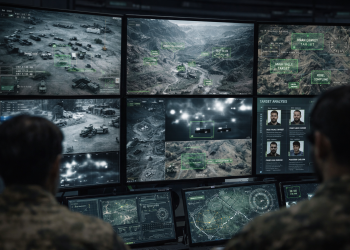
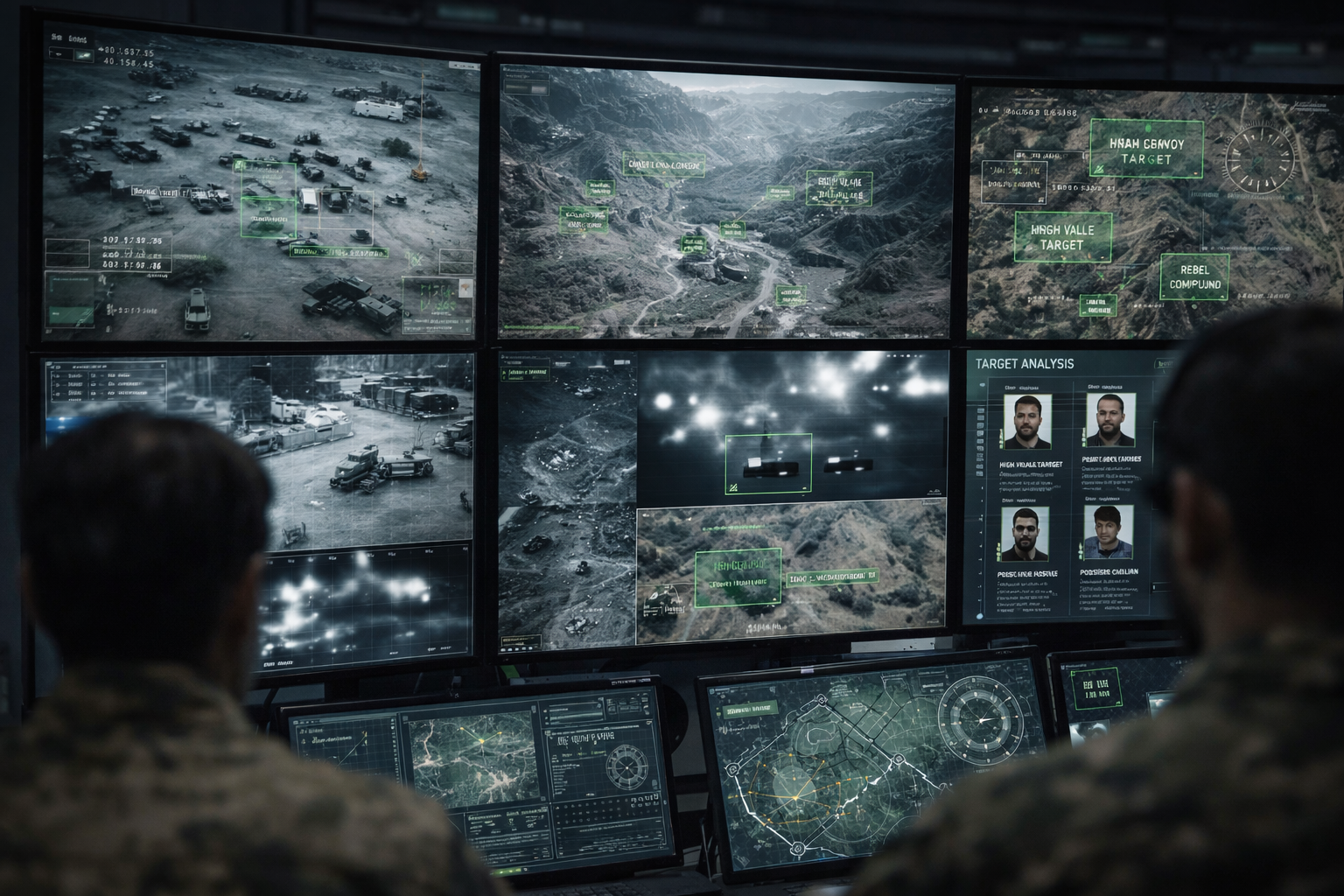
The system integrates data from drones, satellites, and other surveillance sources into a single operational dashboard.
Analysts and commanders can view intelligence reports, potential targets, and operational options in one place.
Reporting on the Iran conflict has described how AI-driven targeting platforms help process large volumes of battlefield data and generate lists of possible targets that require human assessment.
Expanding use of AI across the military
The US Department of Defense has steadily expanded the use of AI systems across its forces.
By 2025, the Maven platform had more than 20,000 users across multiple military units. The technology is also being adopted by NATO allies.
Artificial intelligence now plays several roles in military operations.
Computer vision systems can analyse drone footage to identify vehicles or equipment. Algorithms scan satellite imagery for patterns that may signal military activity.
These tools have already appeared in conflicts such as Ukraine and Gaza, where drone surveillance and digital intelligence analysis are central to modern warfare.
Why AI warfare raises concerns
Despite the speed advantages, the growing role of AI in warfare has raised concerns about oversight and accountability.
One issue is whether faster automated systems allow enough time for careful human judgment.
When software generates large numbers of potential targets quickly, commanders may face pressure to act rapidly.
Recent events in Iran have intensified these concerns.
Investigations into a strike that hit a girls’ school in the city of Minab raised questions about how targeting decisions were made and whether outdated intelligence contributed to the incident.
A Reuters investigation reported that the school had a long public online presence, prompting questions about how the site was classified as a military target.
Experts say the broader challenge is accountability.
AI systems can analyse vast datasets and produce recommendations quickly, but understanding exactly how those recommendations are generated can be difficult.
As warfare becomes more data-driven, balancing technological speed with human responsibility is likely to remain a central debate.
The post Is AI speeding up war? How US struck 2,000 Iran targets in 4 days appeared first on Invezz