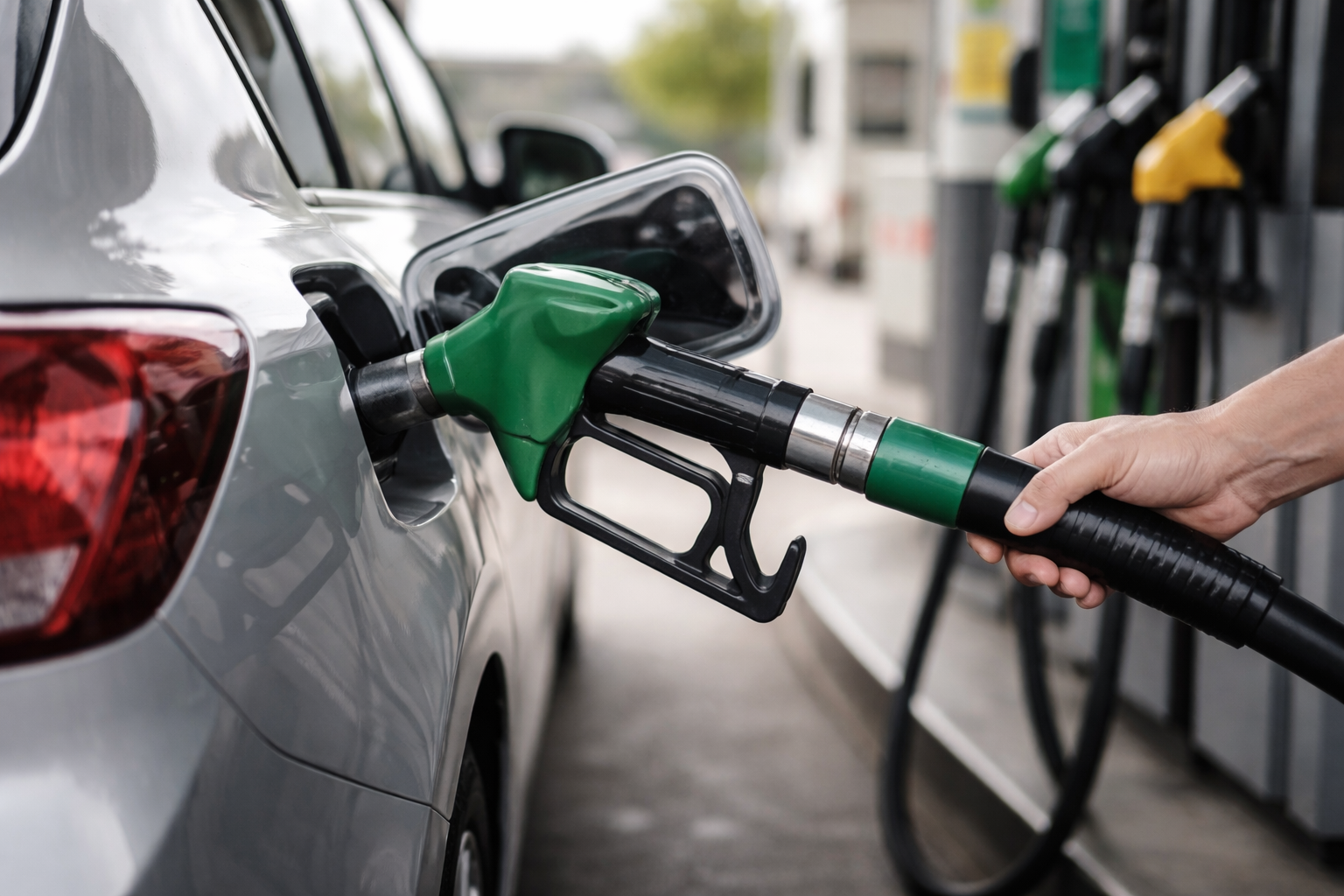
The global energy landscape is fracturing as the US-Iran war escalates, sending crude oil prices on a vertical trajectory.
After beginning this year near $60, West Texas Intermediate (WTI) and Brent crude briefly flirted with a high of $120 – levels not seen in four years – before settling in the triple digits.
And this “oil choke point” is no longer a theoretical risk; it’s a direct tax on the American consumer.
As gasoline prices surge, analysts warn that retailers tethered to lower-income demographics – like Walmart Inc and Dollar General – face a looming contraction in discretionary spending.
Walmart stock: the struggle of the staple giant
Walmart shares sit in a precarious position as energy costs climb.
With an average shopper income of about $66,000, the retail giant serves a demographic that feels the immediate sting of every cent added to the gallon.
While WMT’s robust grocery division often provides a “safe haven” during downturns, rising fuel costs act as a double-edged sword.
Not only do they increase the cost of goods sold through logistics and supply chain friction, but they also drain the “extra” cash customers usually spend on higher-margin electronics or home goods.
If gasoline prices remain elevated, even the world’s largest retailer could see a significant cooling in general merchandise categories.
Dollar General: these margins and tightened purses
Dollar General stock is perhaps the most sensitive to the current energy shock, catering to an average household income of about $60,000, the lowest among major peers.
For these shoppers, the choice between a “full tank of gas” and a “full cart of household essentials” is a weekly reality.
According to Spencer Hanus, a Wolfe Research analyst, for every $1 pop in oil, consumer spending typically sees a 70 bps decline. For DG shares, which have already seen over 5% decline in a week, the “squeeze” is literal.
The retailer’s reliance on frequent, small-trip shoppers makes it uniquely vulnerable when the cost of driving to the store becomes a financial hurdle.
Beyond the aisles: auto parts retailers hit the brakes
The pressure of skyrocketing fuel costs isn’t confined to general merchandise retailers; it’s rapidly spilling over into the automotive aftermarket.
Industry staples like Advance Auto Parts (AAP) and O’Reilly Automotive (ORLY), whose average customers earn roughly $67,000 annually, are facing a paradoxical headwind.
While one might expect older vehicles to require “more maintenance” during economic strain, the sheer velocity of the current oil surge often forces these drivers to defer non-essential repairs.
As Brent sustains triple digits, “discretionary” car care – like performance upgrades or cosmetic fixes – is the first to be cut from the budget.
With AAP and ORLY shares already seeing significant weekly retreats, the sector is bracing for a “break-fix only” cycle, where consumers only visit the store when a repair is no longer optional.
The post Walmart and three retailers most at risk from rising gasoline prices appeared first on Invezz