Europe is ramping up its nuclear defenses, as France expands its arsenal and Poland signals interest in closer nuclear coordination with allies.
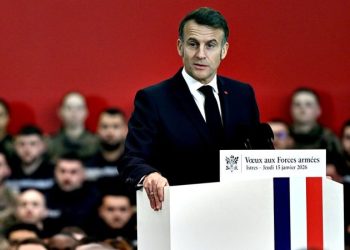
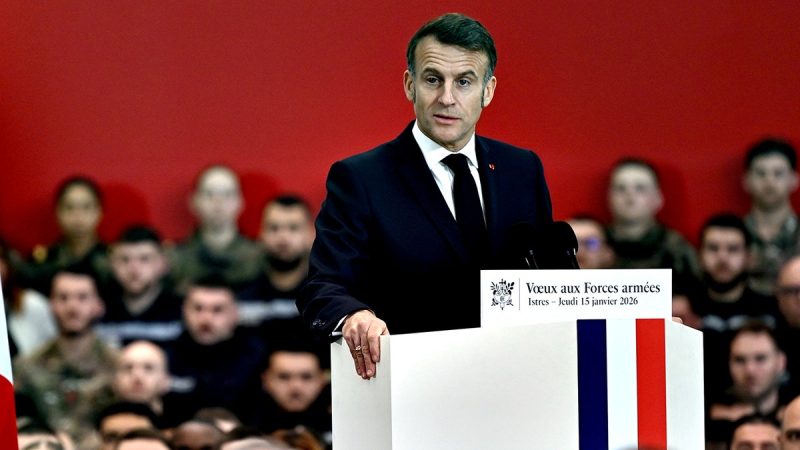
‘I have decided to increase the numbers of warheads of our arsenal,’ French President Emmanuel Macron said Monday.
He also said France will no longer disclose the size of its nuclear arsenal, reversing previous transparency.
‘To be free, one needs to be feared,’ the French president concluded.
France’s shift comes as Europe faces its most volatile security moment in decades, with Russia’s war in Ukraine grinding on, repeated nuclear threats from Moscow, and renewed questions in European capitals about the long-term reliability of U.S. security guarantees. Recent U.S. military strikes against Iran have added to a sense of global instability.
Polish Prime Minister Donald Tusk, meanwhile, signaled his country eventually will try to obtain nuclear weapons.
‘Poland takes nuclear security very seriously,’ he said Tuesday. ‘As our autonomous capabilities grow, we will strive to prepare Poland for the most autonomous actions possible in this matter in the future.’
Polish President Karol Nawrocki, who frequently finds himself at odds with Tusk, said he is ‘a big supporter of Poland joining the nuclear project.’
Poland is a signatory of the nuclear nonproliferation treaty from the 1960s, meaning it is officially committed not to obtaining nuclear weapons.
Tusk said Monday that Poland was in talks with France after Macron offered to deploy nuclear-capable fighter jets to allied countries.
Russia’s invasion of Ukraine in 2022 shattered long-standing assumptions about conventional deterrence on the continent and has been accompanied by repeated nuclear saber-rattling from Moscow, including threats tied to Western military support for Kyiv. Russian officials have periodically warned of escalation if NATO deepens its involvement, keeping nuclear deterrence at the forefront of European security planning.
At the same time, questions have resurfaced across European capitals about the long-term durability of U.S. security guarantees, even as Washington continues to lead NATO and maintain nuclear forces stationed in Europe under long-standing alliance arrangements.
Several European governments have sharply increased defense spending since the start of the Ukraine war.
Germany announced a historic military buildup after decades of underinvestment. Poland has become one of NATO’s top defense spenders as a percentage of GDP, rapidly expanding its conventional forces. And leaders in Paris and elsewhere have revived calls for greater ‘strategic autonomy’ — the idea that Europe must be capable of defending itself if the United States shifts its focus elsewhere.
France is the only nuclear-armed nation in the European Union and maintains an independent deterrent separate from NATO’s U.S.-led nuclear umbrella. Any expansion of its arsenal or broader coordination with European partners marks a significant moment in the continent’s post-Cold War security architecture.
Globally, only nine countries are widely believed to possess nuclear weapons: the United States, Russia, China, France, the United Kingdom, India, Pakistan, North Korea and Israel.
The renewed nuclear focus in Europe is also unfolding as global tensions escalate beyond the continent. The U.S. recently carried out major military strikes against Iran, raising fears of a wider regional conflict and stretching U.S. military attention across multiple theaters.
For some European leaders, the combination of Russia’s aggression and instability in the Middle East reinforces arguments that the continent must be prepared to shoulder more of its own defense burden — including strengthening deterrence at the highest level.